


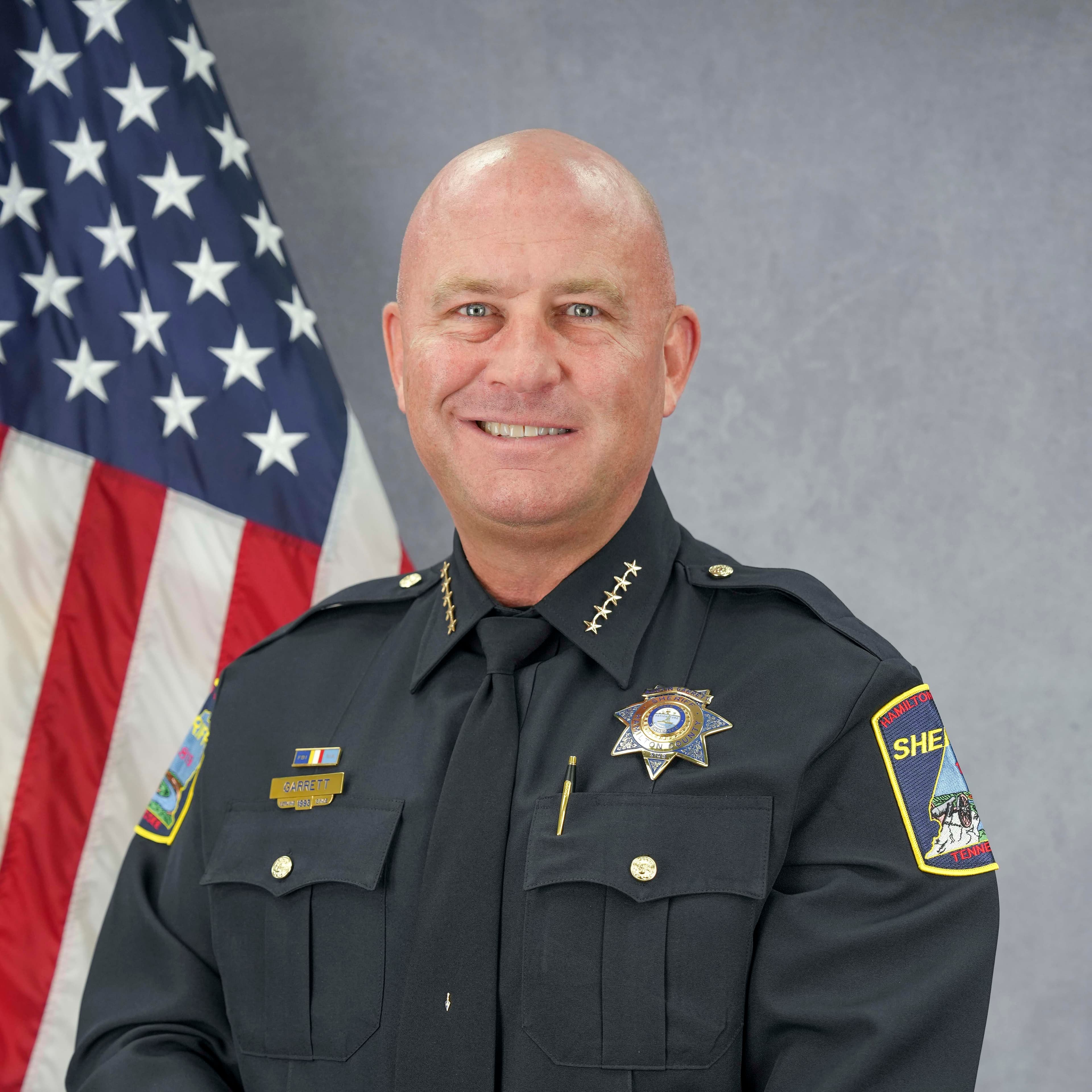
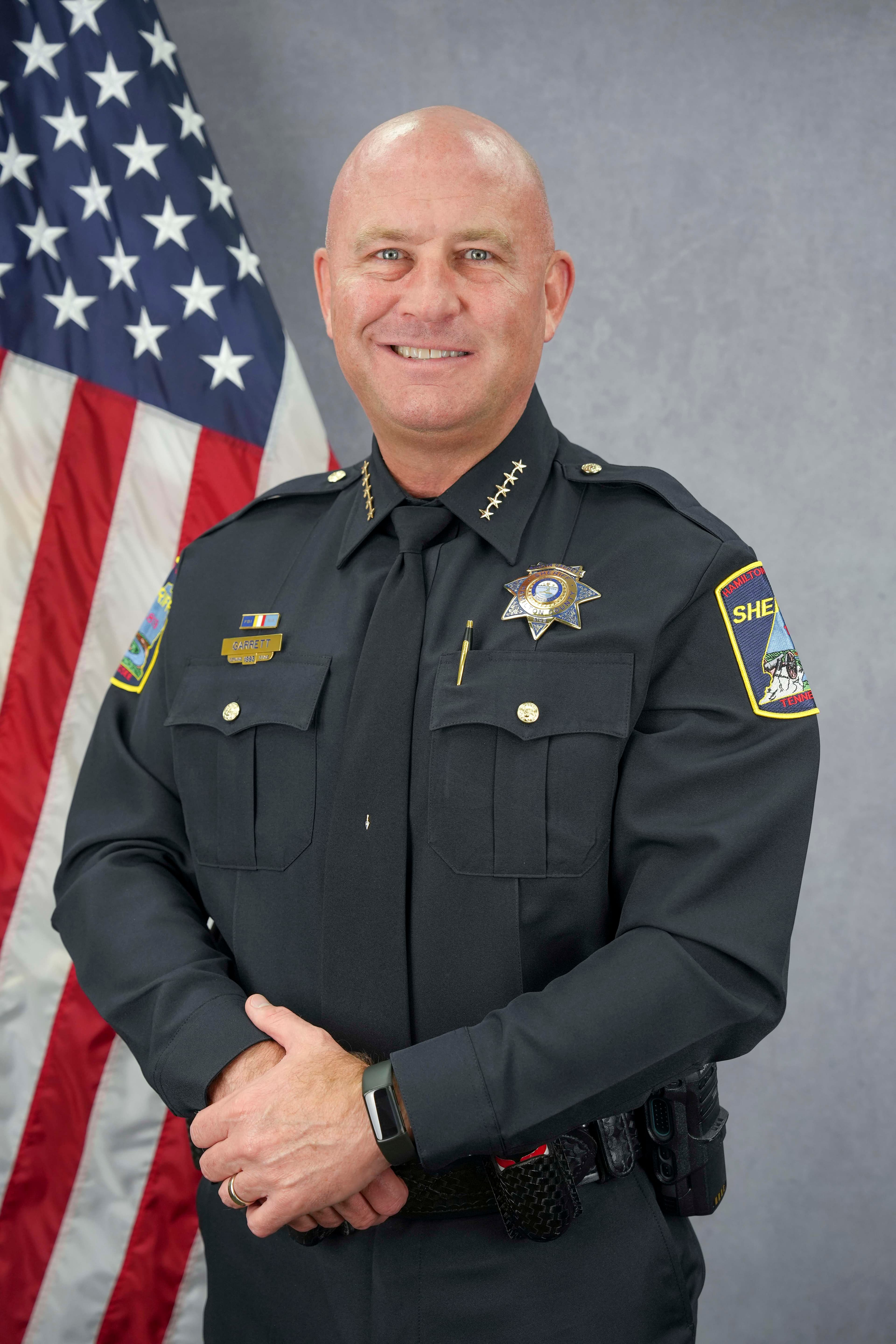
Austin Garrett
Sheriff
Sheriff Austin Garrett was sworn in as the 60th Sheriff of the Hamilton County Sheriff’s Office on Thursday, September 1, 2022. Prior to being elected Sheriff, he was appointed to serve as Chief Deputy by his predecessor, Hamilton County Sheriff Jim Hammond in February 2019.
As Sheriff, he is responsible for the administration and operations of the Hamilton County Sheriff’s Office, which employs 540 personnel and operates under a $68 million budget. Serving the 4th most populated county in the state, the HCSO provides law enforcement and corrections services across a 576-square-mile jurisdiction, protecting over 369,000 residents.
Sheriff Garrett holds a Bachelor of Science degree in criminal justice from Bethel University, is a graduate of the FBI National Academy Session 273, and graduated from the Southeastern Command and Leadership Academy Session 11. Sheriff Garrett also serves as a board member for the Forgotten Child Fund that annually provides Christmas gifts to over 10,000 local children, as well as YCAP, Crime Stoppers, and the Hamilton County 911 Board. He also serves on the legislative committee for the Tennessee Sheriff’s Association.
Prior to his appointment as Chief Deputy, Sheriff Garrett served 25 years with the Chattanooga Police Department, serving in numerous positions, including Patrol Officer, Detective in the Auto Theft Unit, FBI Safe-Streets Taskforce Officer, Motor Officer, and Patrol Sergeant. He retired as a lieutenant, where he was responsible for command of the Tactical and Traffic Operations Division encompassing 13 specialized units.
Sheriff Garrett was born and raised in Bryant, Alabama, and moved to Hamilton County in 1993. He has been married to Pam McAllister-Garrett since May 2012, and they have two children, Haley Masterson and Maddie Garrett. Sheriff Garrett and his wife are members of Shelter Church in East Brainerd.
Expand / Close Bio
Sheriff Austin Garrett was sworn in as the 60th Sheriff of the Hamilton County Sheriff’s Office on Thursday, September 1, 2022. Prior to being elected Sheriff, he was appointed to serve as Chief Deputy by his predecessor, Hamilton County Sheriff Jim Hammond in February 2019.
As Sheriff, he is responsible for the administration and operations of the Hamilton County Sheriff’s Office, which employs 540 personnel and operates under a $68 million budget. Serving the 4th most populated county in the state, the HCSO provides law enforcement and corrections services across a 576-square-mile jurisdiction, protecting over 369,000 residents.
Sheriff Garrett holds a Bachelor of Science degree in criminal justice from Bethel University, is a graduate of the FBI National Academy Session 273, and graduated from the Southeastern Command and Leadership Academy Session 11. Sheriff Garrett also serves as a board member for the Forgotten Child Fund that annually provides Christmas gifts to over 10,000 local children, as well as YCAP, Crime Stoppers, and the Hamilton County 911 Board. He also serves on the legislative committee for the Tennessee Sheriff’s Association.
Prior to his appointment as Chief Deputy, Sheriff Garrett served 25 years with the Chattanooga Police Department, serving in numerous positions, including Patrol Officer, Detective in the Auto Theft Unit, FBI Safe-Streets Taskforce Officer, Motor Officer, and Patrol Sergeant. He retired as a lieutenant, where he was responsible for command of the Tactical and Traffic Operations Division encompassing 13 specialized units.
Sheriff Garrett was born and raised in Bryant, Alabama, and moved to Hamilton County in 1993. He has been married to Pam McAllister-Garrett since May 2012, and they have two children, Haley Masterson and Maddie Garrett. Sheriff Garrett and his wife are members of Shelter Church in East Brainerd.
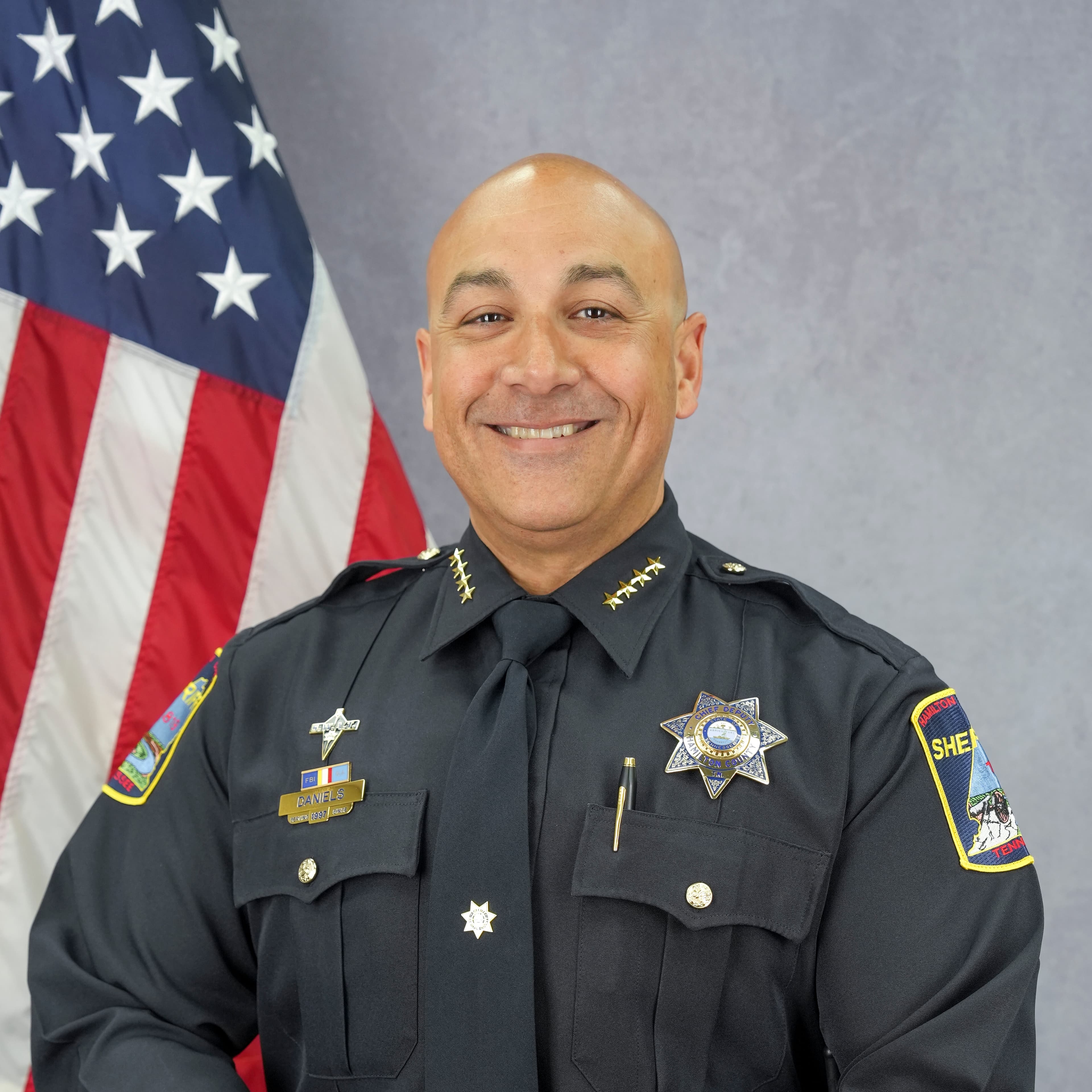
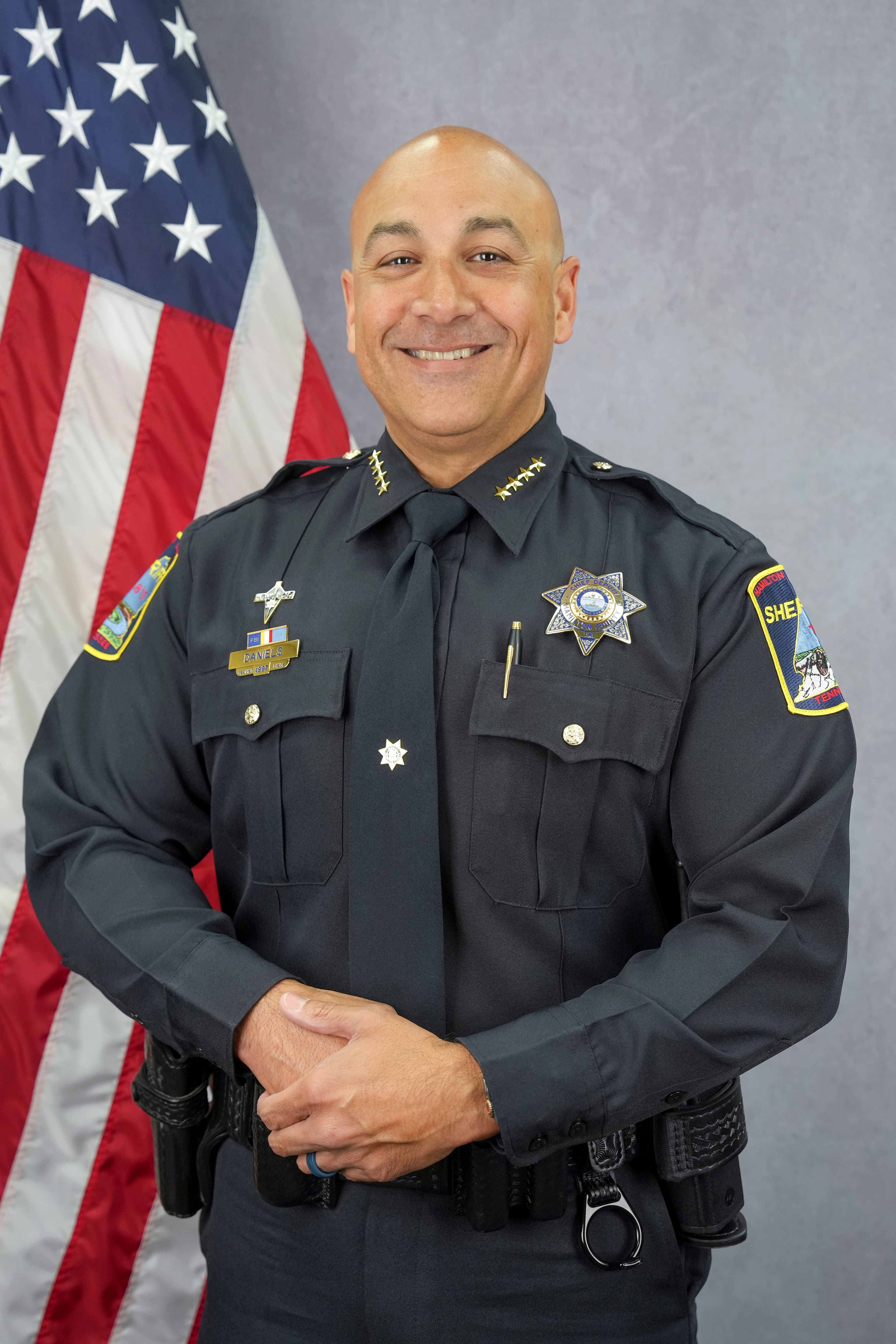
Spencer Daniels
Chief Deputy
Hamilton County Sheriff Austin Garrett officially announced the appointment of Spencer Daniels to the position of Chief Deputy on June 26, 2024. A 26-year law enforcement veteran, Chief Deputy Daniels serves as the second in command of the HCSO. He has served in numerous leadership positions throughout our agency since joining the HCSO in 2003 from the Signal Mountain Police Department.
Prior to his appointment as Chief Deputy, Chief Daniels served as the Captain of Uniform Services and Special Operations. In this role, he oversaw all front-line law enforcement services, as well as Training & Professional Development, Motor Fleet, Records, Tactical Operations, Uniform Special Operations, the School Resource Deputy Unit, and Judicial Security Operations.
Chief Daniels has also served as a patrol lieutenant and lieutenant over Training & Professional Development, where he reorganized the unit and implemented more hands-on, scenario-based training. Chief Daniels also instituted the Precision Immobilization Technique (PIT) as an alternative method to end pursuits and initiated a strong focus on employee wellness and physical fitness. He is a certified instructor in several disciplines specializing in emergency vehicle operations, use of force techniques and applications, and firearms training.
The chief has also served as a patrol sergeant, patrol deputy, Field Training Program Coordinator, Dignitary Protection Team member, and Honor Guard Coordinator. During his time as Honor Guard Coordinator, he re-organized the unit in 2008 to deliver a higher level of respect to deceased members of the agency and to represent the Office of Sheriff at official events.
As a member of the Tennessee Public Safety Network’s Critical Incident Stress Debriefing (CISD) Team, he has used his training to assist public safety personnel statewide affected by critical incidents. One of his proudest achievements is serving on the HCSO SWAT Team for seventeen years, including four years as the team’s commander.
Chief Daniels, a native of Harrison, Tennessee, is a Central High School graduate and earned his bachelor's degree from Bethel University. He is currently pursuing a master's degree in public safety management. He is an alumnus of the Southeastern Command and Leadership Academy at the University of Tennessee and the FBI National Academy, Session 289. Chief Daniels is also a Brock Fellow and graduate of the 10 Project Leadership Program. Before starting his law enforcement career, he served in the U.S. Air Force.
Chief Daniels' mother and most of his family are natives of the greater Chattanooga area, while his father immigrated to the United States from Pakistan in 1969. He is married to his wife, Sarah, and they currently reside in the Birchwood community of Hamilton County.
Expand / Close Bio
Hamilton County Sheriff Austin Garrett officially announced the appointment of Spencer Daniels to the position of Chief Deputy on June 26, 2024. A 26-year law enforcement veteran, Chief Deputy Daniels serves as the second in command of the HCSO. He has served in numerous leadership positions throughout our agency since joining the HCSO in 2003 from the Signal Mountain Police Department.
Prior to his appointment as Chief Deputy, Chief Daniels served as the Captain of Uniform Services and Special Operations. In this role, he oversaw all front-line law enforcement services, as well as Training & Professional Development, Motor Fleet, Records, Tactical Operations, Uniform Special Operations, the School Resource Deputy Unit, and Judicial Security Operations.
Chief Daniels has also served as a patrol lieutenant and lieutenant over Training & Professional Development, where he reorganized the unit and implemented more hands-on, scenario-based training. Chief Daniels also instituted the Precision Immobilization Technique (PIT) as an alternative method to end pursuits and initiated a strong focus on employee wellness and physical fitness. He is a certified instructor in several disciplines specializing in emergency vehicle operations, use of force techniques and applications, and firearms training.
The chief has also served as a patrol sergeant, patrol deputy, Field Training Program Coordinator, Dignitary Protection Team member, and Honor Guard Coordinator. During his time as Honor Guard Coordinator, he re-organized the unit in 2008 to deliver a higher level of respect to deceased members of the agency and to represent the Office of Sheriff at official events.
As a member of the Tennessee Public Safety Network’s Critical Incident Stress Debriefing (CISD) Team, he has used his training to assist public safety personnel statewide affected by critical incidents. One of his proudest achievements is serving on the HCSO SWAT Team for seventeen years, including four years as the team’s commander.
Chief Daniels, a native of Harrison, Tennessee, is a Central High School graduate and earned his bachelor's degree from Bethel University. He is currently pursuing a master's degree in public safety management. He is an alumnus of the Southeastern Command and Leadership Academy at the University of Tennessee and the FBI National Academy, Session 289. Chief Daniels is also a Brock Fellow and graduate of the 10 Project Leadership Program. Before starting his law enforcement career, he served in the U.S. Air Force.
Chief Daniels' mother and most of his family are natives of the greater Chattanooga area, while his father immigrated to the United States from Pakistan in 1969. He is married to his wife, Sarah, and they currently reside in the Birchwood community of Hamilton County.
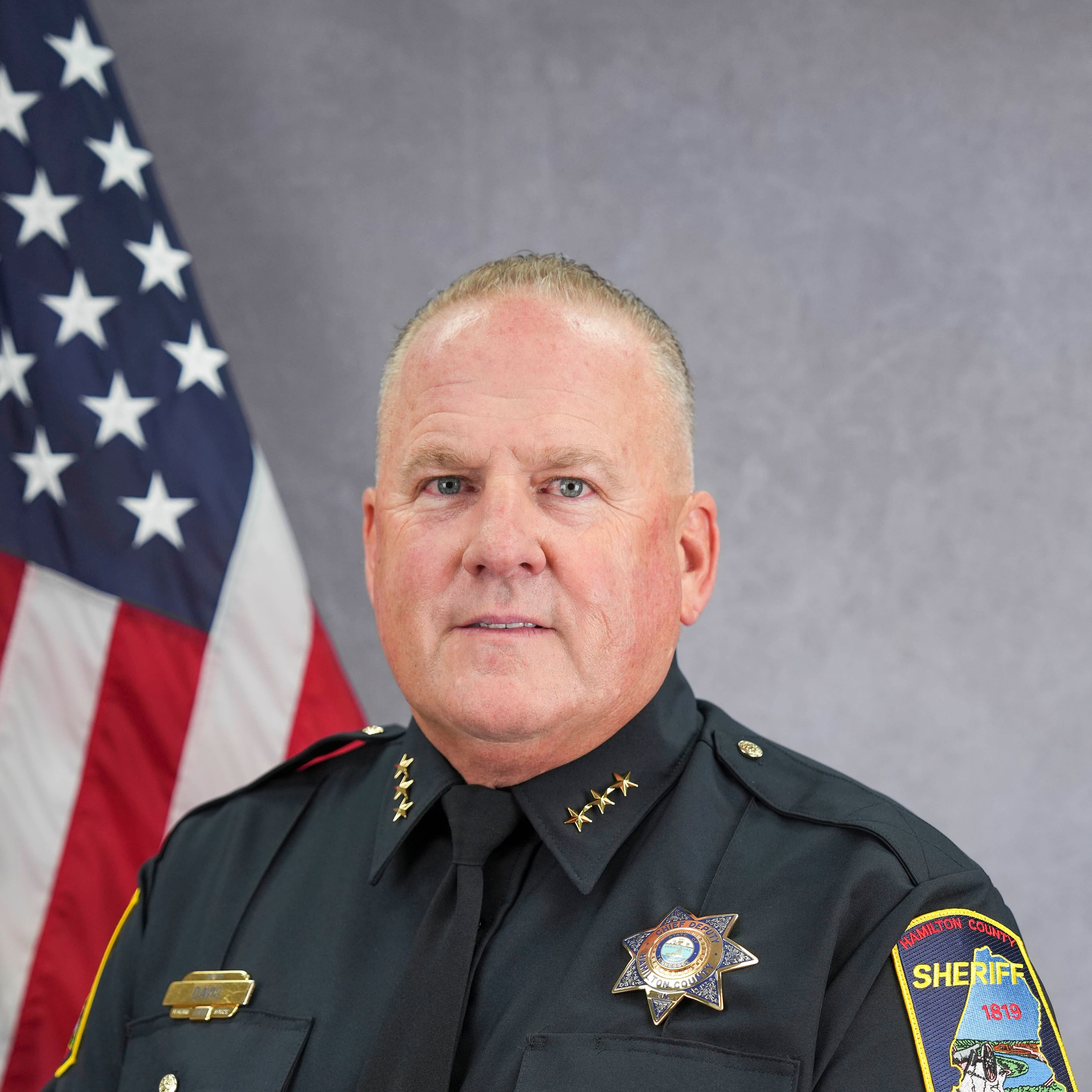
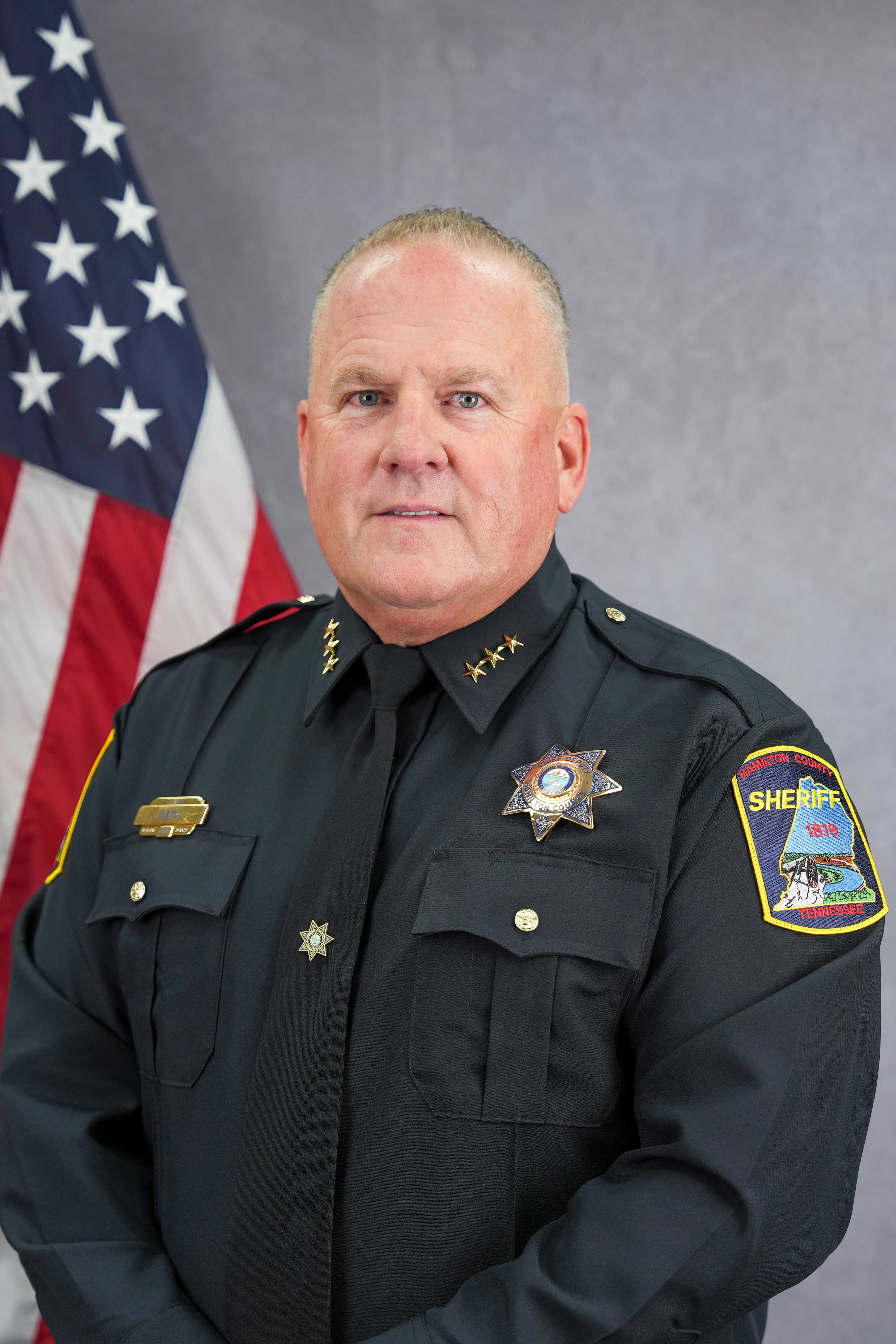
Tim Davis
Deputy Chief of Corrections
Tim Davis was commissioned Deputy Chief of Corrections for the Hamilton County Sheriff’s Office in August of 2025. A seasoned law enforcement professional with over 25 years of experience, Chief Davis oversees all Corrections Services operations.
Chief Davis brings a distinguished career in corrections and law enforcement leadership, having served in a variety of command roles at the Santa Clara County Sheriff’s Office in California, where he retired as Assistant Sheriff. In his prior role, Chief Davis was in command of the 5th largest jail system in California where he was responsible for managing multiple facilities with more than double the total daily inmate population currently housed in the Hamilton County Jail and Detention Center. His extensive background includes training and certifications in jail operations, security, emergency response, and inmate classification.
Over the course of his career, Chief Davis has served as a Jail Training Officer (JTO), Security Enhancement Training Team (SETT) Officer, Less-Lethal Munitions Instructor, Emergency Response Team (ERT) Leader, and Classification Deputy. His leadership roles have included Sergeant of Jail Administration and Training, Sergeant of the Internal Affairs Unit, and Lieutenant and Assistant Division Commander at both male and female detention facilities. He was later assigned to oversee Support Services, which included the Jail Programs Unit, Re-Entry Services, Classification and Gang Intelligence, and the Custody Adult Supervision Unit.
Chief Davis earned his Associate of Arts degree from Ohlone College in 1991. He and his wife Michelle have dedicated a combined 50 years to public service in law enforcement. They are proud parents of five children, two of whom are currently following in their footsteps—serving as a Custody Deputy and a Police Officer.
Expand / Close Bio
Tim Davis was commissioned Deputy Chief of Corrections for the Hamilton County Sheriff’s Office in August of 2025. A seasoned law enforcement professional with over 25 years of experience, Chief Davis oversees all Corrections Services operations.
Chief Davis brings a distinguished career in corrections and law enforcement leadership, having served in a variety of command roles at the Santa Clara County Sheriff’s Office in California, where he retired as Assistant Sheriff. In his prior role, Chief Davis was in command of the 5th largest jail system in California where he was responsible for managing multiple facilities with more than double the total daily inmate population currently housed in the Hamilton County Jail and Detention Center. His extensive background includes training and certifications in jail operations, security, emergency response, and inmate classification.
Over the course of his career, Chief Davis has served as a Jail Training Officer (JTO), Security Enhancement Training Team (SETT) Officer, Less-Lethal Munitions Instructor, Emergency Response Team (ERT) Leader, and Classification Deputy. His leadership roles have included Sergeant of Jail Administration and Training, Sergeant of the Internal Affairs Unit, and Lieutenant and Assistant Division Commander at both male and female detention facilities. He was later assigned to oversee Support Services, which included the Jail Programs Unit, Re-Entry Services, Classification and Gang Intelligence, and the Custody Adult Supervision Unit.
Chief Davis earned his Associate of Arts degree from Ohlone College in 1991. He and his wife Michelle have dedicated a combined 50 years to public service in law enforcement. They are proud parents of five children, two of whom are currently following in their footsteps—serving as a Custody Deputy and a Police Officer.

Ron Bernard
Chief of Staff
Ron Bernard was appointed Chief of Staff by Sheriff Austin Garrett in 2020. Prior to his appointment as Chief of Staff, he served as the Director of Technology and Finance under former Sheriff Jim Hammond. As Chief of Staff, he is responsible for leading Administrative Services which includes Facilities Maintenance, Finance, Information Services, Human Resources, Legal, Recruiting and Special Projects.
Although Ron has been with the HCSO seventeen years as of June 2024, he has over thirty years of professional experience, including twenty plus of those years leading high performing technology teams and has overseen several multimillion-dollar projects
Throughout his tenure with the HCSO, Ron has witnessed the growth of innovation and technology use, personnel growth, and his efforts have been instrumental in implementing the strategic transitional role that administrative services play in our agency’s day-to-day operations.
In 2020, he was appointed by former Sheriff Jim Hammond to oversee the Silverdale Detention Center Transition Team which successfully led a monumental project to transition the Silverdale Detention Center from private control to full operational oversight of the HCSO. This also included the shuttering of the old downtown jail and the transitioning of its operations and inmates to the Silverdale Detention Center, now known as the Hamilton County Jail & Detention Center.
Ron played a vital role when Sheriff Garrett and Mayor Wamp implemented a historic pay increase and maintained a previously implemented pay matrix for HCSO sworn employees. In 2024 under Sheriff Garrett and Ron’s leadership the HCSO has completely reversed a negative personnel attrition rate.
Ron holds a Bachelor of Science Degree from Bryan College majoring in organizational management and an Associate of Computer Science degree from Lakeland Community College. Ron and his wife Belinda have four children, daughters Meg and Sara and sons Sam and Scotty. Ron and Belinda have made the Chattanooga area their home since 2002.
Expand / Close Bio
Ron Bernard was appointed Chief of Staff by Sheriff Austin Garrett in 2020. Prior to his appointment as Chief of Staff, he served as the Director of Technology and Finance under former Sheriff Jim Hammond. As Chief of Staff, he is responsible for leading Administrative Services which includes Facilities Maintenance, Finance, Information Services, Human Resources, Legal, Recruiting and Special Projects.
Although Ron has been with the HCSO seventeen years as of June 2024, he has over thirty years of professional experience, including twenty plus of those years leading high performing technology teams and has overseen several multimillion-dollar projects
Throughout his tenure with the HCSO, Ron has witnessed the growth of innovation and technology use, personnel growth, and his efforts have been instrumental in implementing the strategic transitional role that administrative services play in our agency’s day-to-day operations.
In 2020, he was appointed by former Sheriff Jim Hammond to oversee the Silverdale Detention Center Transition Team which successfully led a monumental project to transition the Silverdale Detention Center from private control to full operational oversight of the HCSO. This also included the shuttering of the old downtown jail and the transitioning of its operations and inmates to the Silverdale Detention Center, now known as the Hamilton County Jail & Detention Center.
Ron played a vital role when Sheriff Garrett and Mayor Wamp implemented a historic pay increase and maintained a previously implemented pay matrix for HCSO sworn employees. In 2024 under Sheriff Garrett and Ron’s leadership the HCSO has completely reversed a negative personnel attrition rate.
Ron holds a Bachelor of Science Degree from Bryan College majoring in organizational management and an Associate of Computer Science degree from Lakeland Community College. Ron and his wife Belinda have four children, daughters Meg and Sara and sons Sam and Scotty. Ron and Belinda have made the Chattanooga area their home since 2002.

Brian Bush
General Counsel
Brian Bush serves as the second General Counsel for the HCSO in our agency’s more than 200 year history. He is a proud Hamilton County native.
General Counsel Bush received his law degree from the University of Tennessee College of Law and a bachelor’s degree in Political Science from Maryville College, in Maryville, TN.
Prior to joining the Hamilton County Sheriff’s Office as General Counsel, Bush served as an Assistant District Attorney in the Hamilton County District Attorney General’s Office prosecuting violent crimes and felonies. Most recently, his practice involved civil litigation as an attorney at the firm of Spears, Moore, Rebman, & Williams, P.C.
General Counsel Bush is also a commissioned intelligence officer, serving in the U.S. Navy Reserve. He serves his community on various boards, and he is dedicated to serving the Hamilton County Sheriff’s Office.
Expand / Close Bio
Brian Bush serves as the second General Counsel for the HCSO in our agency’s more than 200 year history. He is a proud Hamilton County native.
General Counsel Bush received his law degree from the University of Tennessee College of Law and a bachelor’s degree in Political Science from Maryville College, in Maryville, TN.
Prior to joining the Hamilton County Sheriff’s Office as General Counsel, Bush served as an Assistant District Attorney in the Hamilton County District Attorney General’s Office prosecuting violent crimes and felonies. Most recently, his practice involved civil litigation as an attorney at the firm of Spears, Moore, Rebman, & Williams, P.C.
General Counsel Bush is also a commissioned intelligence officer, serving in the U.S. Navy Reserve. He serves his community on various boards, and he is dedicated to serving the Hamilton County Sheriff’s Office.

Carole Miller
Director of Human Resources
Carole Miller began her career with the Sheriff’s Office in 1994 as the Human Resources Assistant under the administration of Sheriff H.Q Evatt. She was promoted to Director of Human Resources in 2018.
As the Director of Human Resources, she is responsible for the administration and operations of the Human Resources Unit, which includes personnel management, payroll services, and recruitment. The mission of the Human Resources Unit is to attract, develop, and retain a talented and diverse workforce that promotes professional growth and development, accountability, and the overall success of the Hamilton County Sheriff’s Office.
Originally not from Hamilton County, Carole spent much of her childhood moving around the world due to her father’s career in the United States Navy. A self-proclaimed “Navy Brat,” she and her family settled in her father’s hometown of Soddy Daisy, Tennessee, in 1971 after he retired from 26 years of Naval service.
Carole is a graduate of Soddy Daisy High School and attended the University of Tennessee at Chattanooga where she earned a bachelor’s degree in administration. She began her career in the legal field with a local law firm prior to transitioning to the Sheriff’s Office in 1994.
Carole is an avid tennis player who has won many local tournaments and represented Chattanooga and Dalton at the USTA state level and Tennessee and Georgia at the regional level.
Expand / Close Bio
Carole Miller began her career with the Sheriff’s Office in 1994 as the Human Resources Assistant under the administration of Sheriff H.Q Evatt. She was promoted to Director of Human Resources in 2018.
As the Director of Human Resources, she is responsible for the administration and operations of the Human Resources Unit, which includes personnel management, payroll services, and recruitment. The mission of the Human Resources Unit is to attract, develop, and retain a talented and diverse workforce that promotes professional growth and development, accountability, and the overall success of the Hamilton County Sheriff’s Office.
Originally not from Hamilton County, Carole spent much of her childhood moving around the world due to her father’s career in the United States Navy. A self-proclaimed “Navy Brat,” she and her family settled in her father’s hometown of Soddy Daisy, Tennessee, in 1971 after he retired from 26 years of Naval service.
Carole is a graduate of Soddy Daisy High School and attended the University of Tennessee at Chattanooga where she earned a bachelor’s degree in administration. She began her career in the legal field with a local law firm prior to transitioning to the Sheriff’s Office in 1994.
Carole is an avid tennis player who has won many local tournaments and represented Chattanooga and Dalton at the USTA state level and Tennessee and Georgia at the regional level.


Learn about HCSO's rich 200-year history:


